



Quick Summary:
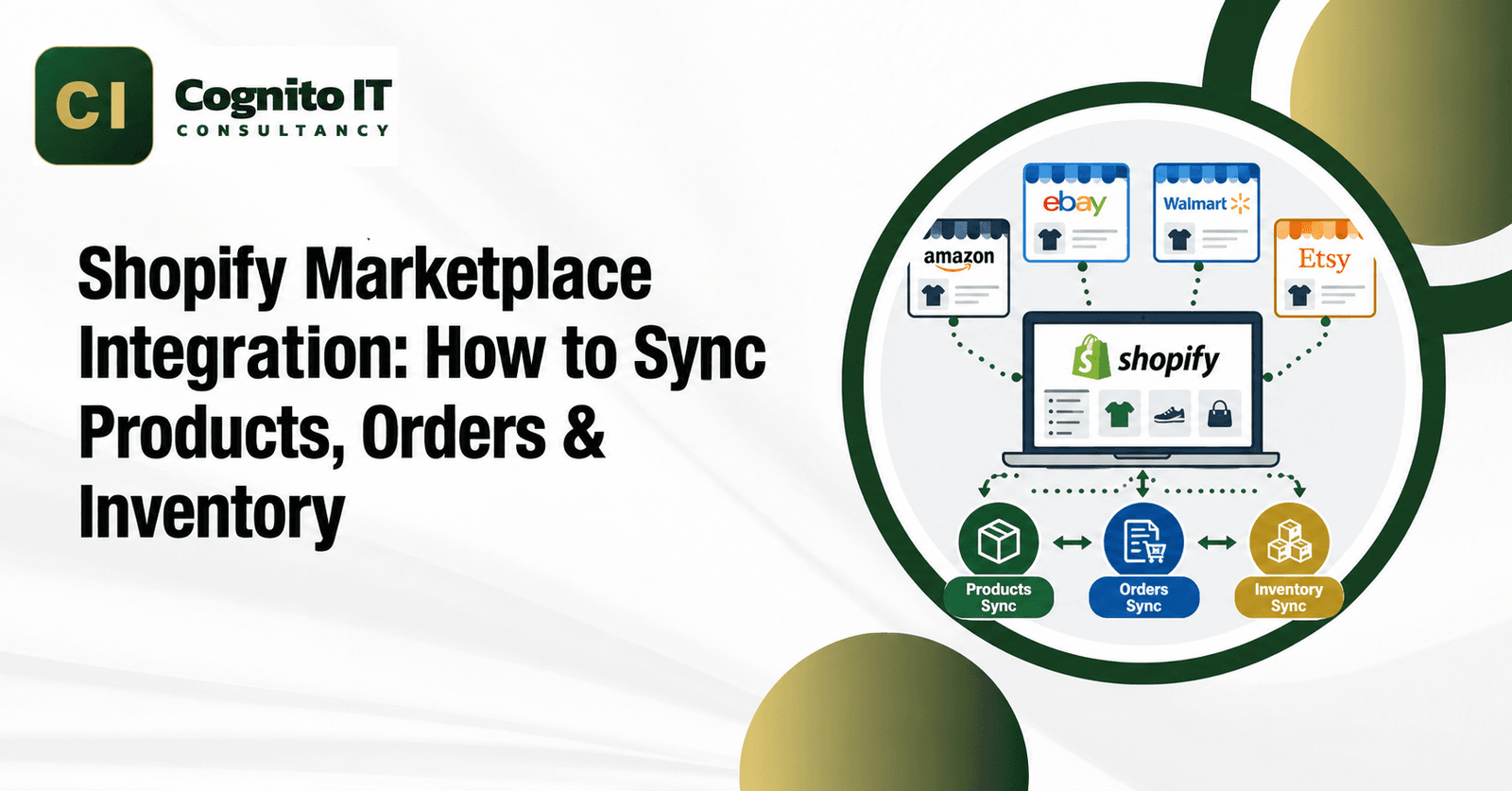
Shopify marketplace integration links your online store with big shopping sites like Amazon and eBay. This smart bridge sends your products out, brings customer orders in, and keeps your stock counts correct. Retailers use a Shopify marketplace integration to stop doing messy typing work by hand every single day.
A Shopify marketplace integration helps online shop owners sell their goods on many different websites at the same time. Instead of typing your product names and prices over and over again, your main store does all the heavy lifting. When someone buys a shirt on a shopping app, your main stock count drops everywhere automatically. This easy setup saves hours of time and stops you from selling things you do not have.
What Is Shopify Marketplace Integration and Why Do You Need It?
A Shopify marketplace integration connects your main store page to outside shopping sites using smart computer links. Without this helper tool, running extra seller accounts makes your stock counts get mixed up very fast. Setting up a proper Shopify marketplace integration lets shop owners push product lists out, match up stock numbers, and pull buyer orders right into one main dashboard. This smart trick stops double-selling items and saves you from doing messy math work every week.
What Is Shopify Marketplace Integration and Why Do You Need It?
A Shopify marketplace integration connects your main store page to outside shopping sites using smart computer links. Without this helper tool, running extra seller accounts makes your stock counts get mixed up very fast. Setting up a proper Shopify marketplace integration lets shop owners push product lists out, match up stock numbers, and pull buyer orders right into one main dashboard. This smart trick stops double-selling items and saves you from doing messy math work every week.
Native App vs. Third-Party Connector vs. Custom API Integration
Picking the right tool depends on how big your store is and how many items you sell to people.
| Approach | Best For | Customization Level | Main Limit |
| Native Apps | Normal shops, one marketplace | Low | Strict rules, fewer pro tools |
| Third-Party Connectors | Many sites, medium item lists | Medium | Monthly fees, set limits |
| Custom API Integration | Big business ERP software | High | Costs more to build and fix |
Native apps work best for easy online stores opening up on just one big shopping site.- Third-party connectors fit stores that list goods across several channels with a medium number of product choices.
- Custom API integrations become needed when businesses need special price rules or complex warehouse shipping setups.
How Shopify Product Data Maps to External Marketplaces
Moving product details from your shop to other websites takes careful matching so everything lines up right.
Shopify Product Catalog
↓
SKU, GTIN / UPC & Attributes
↓
Category & Description Rules
↓
Variant & Price Transformation
↓
Marketplace Live Listing
- Codes and Details: Product pages need exact item codes, barcodes, clear titles, and bright photos to match what sites ask for.
- Attribute Matching: Your store details must fit the exact folder rules that the outside shopping site requires.
- Size and Color Setup: Your item choices must translate smoothly into parent-child groups on other store pages.
- Price and Money Rules: Custom price lists let shop owners add extra costs or change prices before items go live.
- Fulfillment Rules: Every item links to how it gets shipped out to the buyer later.
How Shopify Marketplace Inventory Sync Works
Inventory matching helps stop you from selling items you ran out of by sending stock updates across all your selling spots when a buyer pays.
Inventory counts can be synced between Shopify and connected marketplaces, with the update speed depending on the integration method, marketplace rules, and user settings.
Core Inventory Steps
- Store and Warehouse Setup: Multi-warehouse software links your physical store locations to the right marketplace shipping points.
- Available vs. Set Aside Stock: Integration rules figure out how many items sit on shelves versus how many are sold already.
- Safety Buffers: A special connector can hold back a few items from online sale so you never accidentally oversell.
- Inventory Checks: Automated system checks compare marketplace item counts against your main shop records to fix any tiny sync delays.
Individual Marketplace Architectures: Amazon vs. eBay vs. Walmart
Treating all shopping sites the same causes big problems because Amazon, eBay, and Walmart use totally different computer rules.
| Marketplace | Product Sync Way | Order Sync Method | Main Challenge |
| Amazon | Item codes and price rules | SP-API orders and feeds | Strict brand rules and category limits |
| eBay | Item ID and offer rules | RESTful API notices | Changing category needs |
| Walmart | Marketplace APIs and feeds | APIs and instant webhooks | Tough approval checks and strict scorecards |
Shopify and Amazon Integration: Amazon inventory syncs with your store using official tools and APIs to handle item codes, prices, and shipping rules correctly.- Shopify and eBay Integration: eBay links sync your item listings, stock numbers, and orders based on what the tool and eBay’s computer system allow.
- Shopify and Walmart Integration: Walmart integrations use special developer tools for item lists, stock, and orders. Walmart also gives instant event alerts so tools do not have to check constantly.
How Multi-Channel Order Management Flows
Moving buyer orders from outside shopping sites into your main fulfillment center takes a clear step-by-step path.
Amazon eBay Walmart
↓ ↓ ↓
Marketplace APIs / Connectors
↓
Integration Middleware
↓
Shopify + ERP/WMS
↓
Warehouse Packing & Shipping
↓
Tracking Number Returned to Marketplace
- Order Capture: The sync tool checks outside sales pages for new buyer purchases.
- Shopify and ERP Routing: Marketplace orders can be imported into Shopify or sent straight to warehouse software, depending on your setup.
- Fulfillment Closing: Once packing slips print, the tool sends tracking numbers back to the shopping site to close the sale.
Common Operational Failures Without Proper Integration
Relying on hand-typed lists or broken plugins without good error fixes brings back messy store problems.
- Code Mismatches: Wrong item codes cause incoming buyer orders to fail, freezing up your packing room.
- Sync Delays and Drops: Slow stock updates lead to mismatched item counts across different sales channels.
- Stalled Error Loops: Unchecked system limits trap failed orders in silent background loops.
- Unfixed Cancellations: If a buyer cancels an order on a marketplace and the stock does not return properly, your inventory counts get out of whack.
What Factors Determine Shopify Marketplace Integration Costs?
Software fees and building prices depend on your store’s setup size instead of a simple monthly flat rate.
- Catalog Size and Options: Large item lists with complex sizes and colors need deeper database mapping.
- Number of Channels: Linking your shop to three websites costs more than selling on just one extra site.
- Order Volume and Limits: High daily buyer numbers need stronger system tools and faster server access.
- ERP and Warehouse Software: Custom coding required to connect Shopify with older business backends.
- Ongoing Monitoring: Regular system checks, log audits, and support help keep everything running clean.
Example Shopify Marketplace Integration Architecture
An example technical setup shows how custom middleware connects multi-channel sales portals with business software:
Business Requirement: 3 Marketplaces + Shopify + ERP
Problem: Manual CSV inventory updates causing stockouts
Solution: Shopify ↔ Middleware ↔ Amazon / eBay / Walmart
Shopify ↔ ERP / WMS (Fulfillment sync)
- Data Synchronized: Item codes, barcodes, stock levels, orders, tracking numbers, and cancellations.
- Result: Lower manual typing work and fewer multi-channel inventory mistakes.
How Cognito IT Handles Shopify Marketplace Integrations
Cognito IT builds custom connection steps designed to fit complex multi-channel store catalogs with business software.
- Catalog and Audit Check: We check your item codes, product sizes, and current sales channels.
- Channel and Data Mapping: We set up exact matching rules between Shopify and marketplaces like Amazon, eBay, and Walmart.
- Inventory and Location Setup: We configure warehouse shipping routes, safety reserve limits, and stock rules.
- Middleware and API Building: We write secure code and event alerts to automate order flow and stock updates.
- Error Handling and Retry Tools: We set up smart logs and auto-retry steps for failed sync actions.
- Sandbox Testing and Launch: We run full test checks in a safe space before launching your live store feeds.
Need a custom Shopify marketplace integration for your retail business? Cognito IT builds tailored sync workflows to connect your catalog, orders, and inventory.
Contact the team at Cognito IT Consultancy or call +91 81477 17676 📞 to talk about your store.
Click here to get the best Shopify CRO Services to increase conversions. Also get Shopify SEO, Store Setup, Theme Customization, and Migration Services.
Follow us on Facebook and Instagram for more tips and updates.
Frequently Asked Questions
1. Does Shopify integrate with Amazon?
Yes, Shopify connects with Amazon to match product listings, inventory counts, and customer orders using supported connector tools.
2. Does Shopify integrate with eBay?
Yes, Shopify links to eBay to manage fixed-price listings, adjust stock counts automatically, and pull buyer purchases into your store.
3. Can Shopify sync marketplace inventory?
Yes, inventory levels match up across connected sales sites, with update timing governed by system limits and warehouse location rules.
4. Can marketplace orders be imported into Shopify?
Yes, customer orders placed on external sales channels flow right into your Shopify fulfillment dashboard and connected ERP systems.
5. Can Shopify connect multiple marketplaces?
Yes, shop owners can connect multiple channels like Amazon, eBay, and Walmart using proper apps, connectors, or custom integration tools.
6. How does Shopify prevent marketplace overselling?
It uses continuous inventory syncing, location rules, and safety buffers across connected channels to lower risks.
7. Can Shopify marketplace integration connect to an ERP?
Yes, integration layers use built-in connectors, middleware, or custom APIs to bridge Shopify data with business planning software.
8. What happens when marketplace synchronization fails?
API errors log problems, trigger automatic retry queues, start data reconciliation, and route unresolved items for manual review.
9. When should I use a custom Shopify marketplace integration?
Custom integrations help when managing complex ERP workflows, massive item lists, custom pricing, or multi-warehouse routing.
10. Why choose Cognito IT for your project?
Cognito IT builds custom Shopify marketplace integration solutions tailored to your exact item counts, hardware, and enterprise workflows. Contact Cognito IT today at +91 81477 17676