



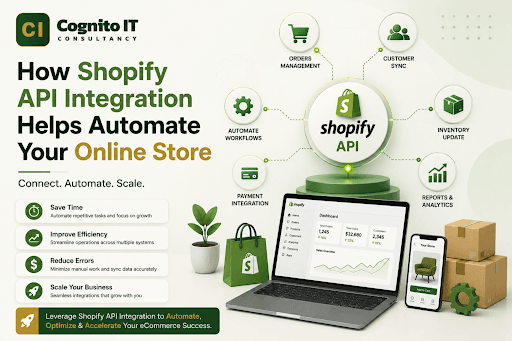
Think manual data entry is the only way to manage a digital shop? That is a huge mistake. Many people assume they must spend hours updating every single price or inventory level by hand. Shopify API Integration works much better by handling these boring tasks automatically.
Most owners waste valuable time copying customer details from one screen to another. This manual effort is a common trap for growing brands. A proper Shopify API Integration allows different software systems to talk to each other without human help. It keeps the business running smoothly while the team focuses on bigger goals.
Real Power of Shopify API Integration
The main goal of a Shopify API Integration is to link the store directly to a warehouse or supplier. Stock levels are updated the second a customer makes a purchase. This prevents the frustration of selling items that are actually out of stock. It keeps the customer experience positive and reliable.
Shipping labels can print themselves as soon as a payment clears. Tracking numbers go out to customers without anyone having to type a single digit. This part of the Shopify API Integration makes the fulfillment process feel efficient. It is the best way to manage a high volume of orders during busy seasons.
Key Benefits of Store Automation
- Syncs inventory across all different selling platforms instantly.
- Sends order details to accounting software without manual entry.
- Updates tracking info for customers at the exact moment of shipping.
- Connects marketing tools to actual sales data for better ads.
- Ensures product prices stay consistent across every sales channel.
- Reduces human errors that lead to lost packages or incorrect billing.
Why Shopify API Integration Saves Business Time
Time is a resource that no business owner can afford to waste. A good Shopify API Integration handles tasks in seconds that used to take several hours. Repeating the same data entry twice is a waste of mental energy.
The system works in the background while the team works on creating new products. Handling a larger volume of orders becomes possible without hiring a massive staff. This part of the Shopify API Integration allows a brand to scale up while keeping overhead costs low. It ensures profit margins stay healthy during growth.
| Feature | Manual Management | API Integrated |
| Processing Speed | Slow and Tedious | Instant and Automatic |
| Data Accuracy | High Risk of Mistakes | Reliable and Consistent |
| Ability to Scale | Very Difficult | Simple and Smooth |
| Labor Costs | High Hourly Expenses | Low Subscription Costs |
Managing Customer Data with Shopify API Integration
The customer list is the heart of every successful online business. A standard Shopify API Integration sends new buyer information directly to an email marketing list. Welcome emails can go out right after the first purchase is made. This ensures the brand stays fresh in the mind of the buyer.
Data stays organized and accessible without messy spreadsheets. Repeat sales often increase when this data is used to send personalized offers. This part of the Integration helps the business understand what shoppers really need. It builds a stronger connection between the store and the community.
Steps to Automate Daily Store Tasks
- Connect the shop to a reliable shipping and fulfillment platform.
- Link the store data to a professional accounting application.
- Set up automatic email triggers for abandoned shopping carts.
- Sync the online stock with the physical warehouse inventory list.
- Test the data flow to ensure information moves correctly.
Lower Stress Levels with Shopify API Integration
Tax season becomes much easier when the numbers are already organized. During a Shopify API Integration, financial data flows directly into the tax preparation software. Searching for lost receipts or missing invoices becomes a thing of the past. Most of the paperwork is finished before the laptop even opens.
The connections between apps stay secure and protected from outside threats. A standard setup means spending less time on technical support and more time on strategy. Using a reliable system builds confidence during the busiest months of the year. It allows the business to function like a well-oiled machine.
Better Marketing Success Rates
Marketing works best when it is backed by real-time data. A thorough Integration tells advertising platforms exactly what people are buying. This stops the waste of showing ads for products a customer has already purchased. Ad costs go down because the targeting becomes much more precise.
- Show live inventory levels in social media advertisements.
- Send special reward coupons to top spenders automatically.
- Track which specific ads lead to a verified sale.
- Update the product catalog for Google and Facebook daily.
- Measure the exact profit margin on every single item sold.
Handling Large-Scale Inventory Safely
Selling on multiple platforms like Amazon and a personal site is complex. A deep Shopify API Integration keeps the numbers identical on every channel. The warehouse team always knows exactly what needs to be packed and shipped. It makes the brand look professional and trustworthy to every buyer.
The system handles difficult tasks like calculating different tax rates for various regions. Guessing the shipping cost for a faraway destination is no longer necessary. This part of the Shopify API Integration protects the bottom line. Accuracy is the main pillar of a successful e-commerce empire.
Better Reporting for Smarter Choices
Seeing the truth about sales performance is necessary for making good decisions. A proper Shopify API Integration provides clear reports that are easy to read. It becomes obvious which products are winners and which are just taking up space. This helps avoid wasting money on inventory that does not move.
Analytics tools show exactly where visitors are coming from before they buy. Marketing spend can shift to the channels that bring in the most revenue. This part of the Shopify API Integration helps the business grow with speed. It provides the data needed to make bold moves with total certainty.
Final Thoughts
Automating a store is the only way to expand without burnout. The technology exists to handle the repetitive work so the team can focus on creativity.
Setting up the system correctly once provides freedom for many years. Trusting the software leads to a more organized and profitable business for everyone involved.
Click here to get the best Shopify CRO Services to increase conversions. Also get Shopify SEO, Store Setup, Theme Customization, and Migration Services.
Follow us on Facebook and Instagram for more tips and updates.
FAQs
1. Does an API slow down the website speed?
The integration works behind the scenes and does not affect the loading time for customers.
2. Is it difficult to set up an integration?
Most tools offer simple buttons to connect, but complex needs might require professional assistance.
3. Can a physical store be connected to?
Linking a brick-and-mortar shop ensures that all stock levels stay perfectly in sync everywhere.
4. What happens if a connection fails?
Modern systems include alerts that notify the owner immediately so the link can be fixed.
5. Need expert help with a Shopify API Integration?
Call cognitoitconsultancy.com at +91 81477 17676 for professional help and smart store automation.