



Introduction: Why Exit-Intent Popups Still Matter in 2025
Every Shopify brand struggles with cart abandonment. While traffic costs continue to rise, most visitors leave without making a purchase. That’s where exit-intent popups come in.
Exit-intent popups detect when a shopper is about to leave and deliver a targeted offer, reminder, or incentive — right before they bounce.
This simple action can recover 10–25% of almost-lost revenue, making exit-intent popups one of the highest-ROI retention tools available.
1. What Are Exit-Intent Popups? (And Why They Convert)
Exit-intent popups use cursor movement, scroll velocity, or session behavior to detect when a shopper intends to leave your store.
When triggered, the popup shows:
✔ A discount
✔ A bundle offer
✔ Free shipping
✔ A reminder
✔ A lead capture form
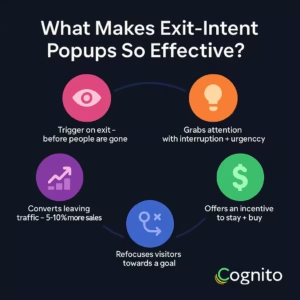
This works because the popup interrupts the bounce moment with something relevant and valuable.
Why they convert:
- They catch shoppers at the highest bounce-risk moment
- They reduce hesitation with real-time incentives
- They offer clarity when confusion causes exits
- They improve list-building without hurting UX
2. Why Shoppers Leave Your Shopify Store (Top Reasons)
Before optimizing exit-intent popups, it’s important to understand the behavior behind the exit.
Common abandonment triggers:
- Unexpected shipping costs
- Slow loading pages
- Price comparison
- Not ready to buy
- Forgetting about the cart
- Long forms
- No guest checkout option
A pop-up alone cannot fix UX problems — but it can save the sale before a visitor disappears forever.
3. Types of Exit-Intent Popups That Recover the Most Sales
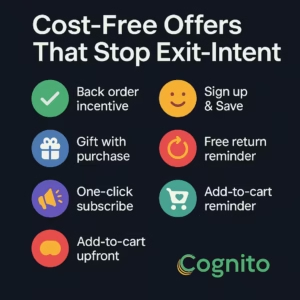
3.1 Discount-Based Popups
Example: “Wait! Get 10% off before you leave.”
Best for: New visitors, impulse buyers.
3.2 Free Shipping Popups
Shipping shock is a top reason shoppers leave.
A “Free Shipping Today Only” popup converts extremely well.
3.3 Bundle or Upgrade Popups
Offer more value than a discount.
Example: “Upgrade to a 3-pack and save 25%.”
3.4 Lead Capture Popups
Great for brands prioritizing list growth.
Example: “Join our list and unlock early access.”
3.5 Reminder Popups
Show what they’re about to lose.
Example: “Your cart is still full — don’t miss out!”
4. How to Design a High-Converting Exit-Intent Popup
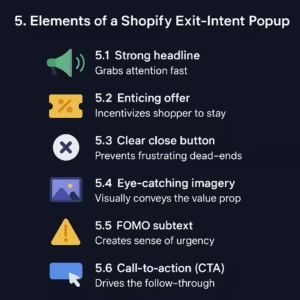
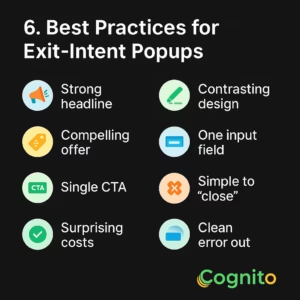
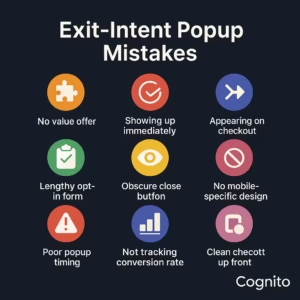
To make exit-intent popups effective, design matters.
Key elements:
✔ Clean visual hierarchy
✔ Strong headline
✔ Minimal text
✔ Clear incentive
✔ Single CTA
✔ Mobile responsiveness
✔ Limited distractions
What NOT to do:
❌ Ask for too many fields
❌ Add multiple CTA buttons
❌ Cover the entire screen
❌ Use confusing language
5. Personalization: The Secret Weapon Behind Exit-Intent Success
Personalized exit-intent popups perform 20–40% better than generic ones.
Examples:
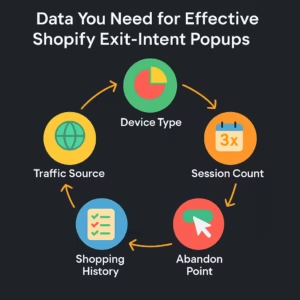
- Based on cart value
- Based on viewed category
- Based on returning visitor behavior
- Based on UTM source
- Based on geo-location (free shipping rules)
Example Personalized Popup
“You were browsing skincare — get 15% off your first serum today.”
6. Mobile vs Desktop Exit-Intent Popups (What You Must Know)
Mobile exit detection works differently because there’s no cursor movement.
Mobile exit triggers:
- Fast scroll up
- Back button
- Inactivity
- Tab switching
- Closing browser tab
Always use lightweight popups for mobile to avoid blocking UX.
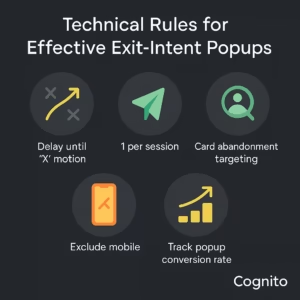
7. When to Show Exit-Intent Popups (Timing Rules)
Bad timing hurts conversions.
Good timing boosts revenue.
Best timing strategies:
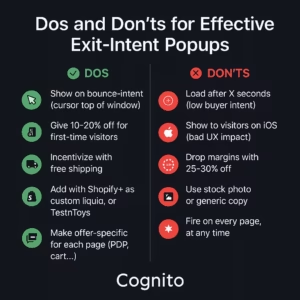
✔ Show only once per session
✔ Delay after first page scroll
✔ Show on high-intent pages: PDP, Cart, Checkout
✔ Add frequency limits
✔ A/B test offers every 7–14 days
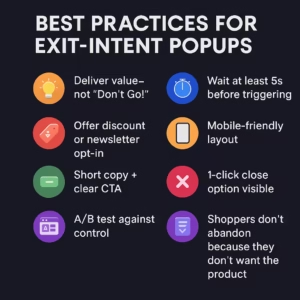
8. What to Offer Inside Exit-Intent Popups (Top Incentives)
The best incentive depends on your brand type and the margin you offer.
Best-performing offers:
- 10–15% off
- Free shipping
- Buy more, save more
- Free gift
- VIP early access
- Points bonus
- Category-specific promo
Non-discount incentives (great for premium brands):
- Education
- Social proof
- Guarantee
- Scarcity reminder
9. Tools to Add Exit-Intent Popups to Shopify
Top Shopify apps for exit-intent popups include:
⭐ Privy
⭐ Klaviyo Forms
⭐ Justuno
⭐ OptiMonk
⭐ ReConvert
⭐ Wisepops
Each offers exit-intent triggers, A/B testing, and personalization.
10. How to Measure Exit-Intent Popup Performance
Track KPIs such as:
✔ Popup views
✔ Conversion rate
✔ Email captures
✔ Revenue recovered
✔ A/B test results
✔ Mobile vs desktop performance
✔ Offer performance
If a popup doesn’t convert within 7 days, revise the incentive or design.
Conclusion: Exit-Intent Popups Are Your Revenue Safety Net
Every visitor who tries to leave is an opportunity waiting to be recovered.
With the right offer, smart timing, and clean design, exit-intent popups can recover 10–25% of lost revenue — without spending more on ads.
Exit-intent isn’t a band-aid.
It’s a strategic revenue multiplier.
→ Get a Personalized Recommendation Audit from Cognito.
📩 Get your free audit here: https://cognitoitconsultancy.com/
📧 Book a Strategy Call: sandy@cognitoitconsultancy.com
👉 Meet Now: https://cal.com/cognitoitconsultancy/30min
🔗 Shopify Experts: Click Here
Follow Us for More Insights on D2C and Digital Transformation
Stay ahead of the curve in e-commerce, digital strategy, and IT consulting by connecting with us on our social platforms: