



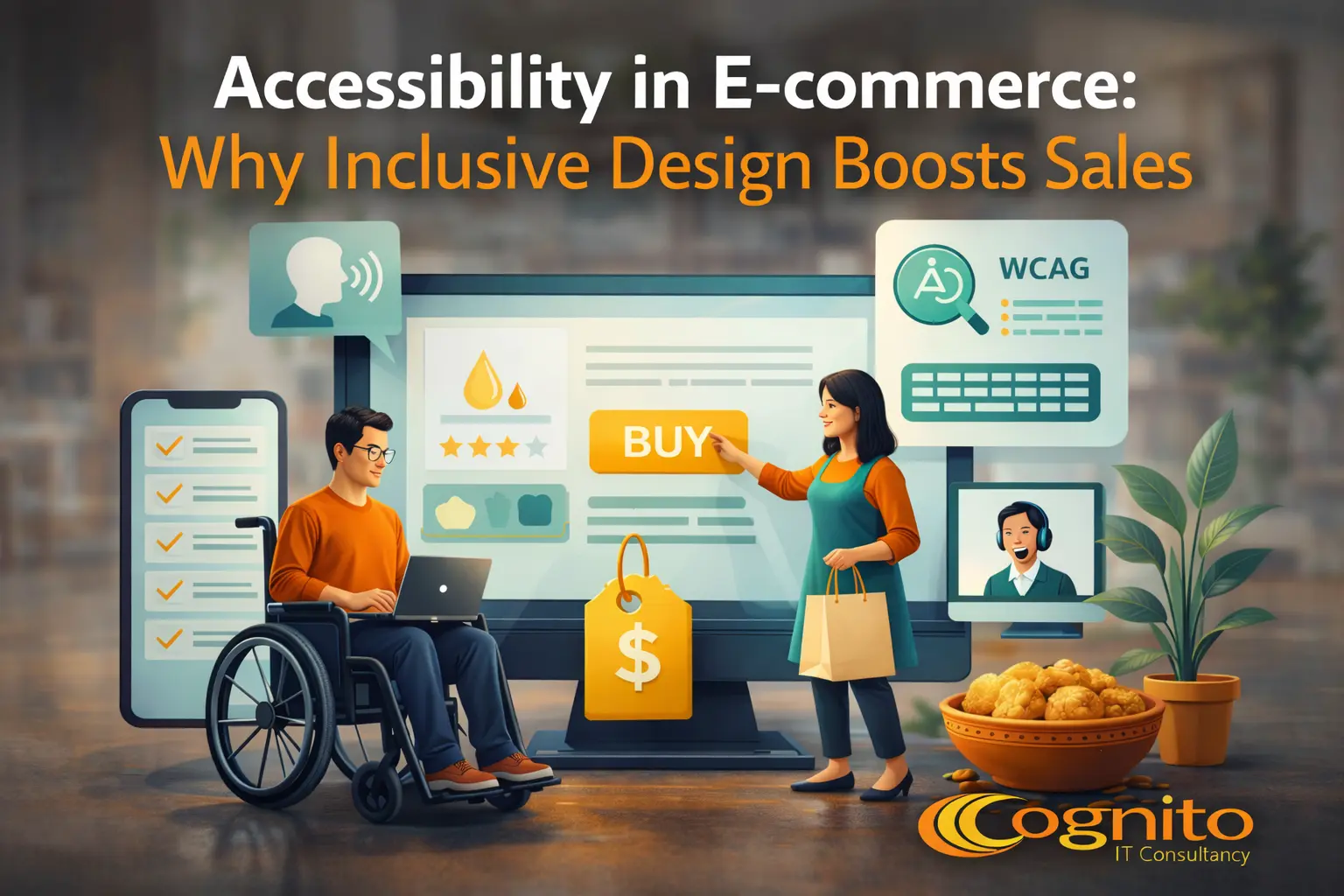
Accessibility in e-commerce is no longer optional. It is a growth strategy. When online stores are easy to use for everyone, conversions rise naturally.
In fact, accessibility in e-commerce improves usability, builds trust, and unlocks new revenue opportunities. Inclusive design does not just help users with disabilities. It helps all customers buy with confidence.
What Is Accessibility in E-commerce?
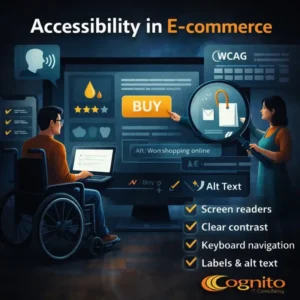
Accessibility in e-commerce means designing online stores so everyone can use them. This includes people with visual, hearing, motor, or cognitive impairments.
Accessible stores:
- Support screen readers
- Use clear contrast and readable fonts
- Allow keyboard navigation
- Provide descriptive labels and alt text
As a result, more users can browse, shop, and complete purchases without friction.
Why Accessibility in E-commerce Matters More Than Ever
Online shopping should be effortless. However, many stores unintentionally block users through poor design choices.
When accessibility barriers exist:
- Users abandon carts
- Trust declines
- Conversion rates suffer
On the other hand, accessible experiences feel smoother. Therefore, users stay longer and buy more often.
The Business Case for Accessibility in E-commerce
Accessibility is not just a compliance issue. It is a revenue driver.
Key benefits include:
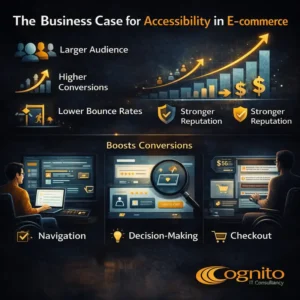
- Larger reachable audience
- Higher conversion rates
- Lower bounce rates
- Stronger brand reputation
Because inclusive design removes friction, sales increase without extra ad spend.
How Accessibility in E-commerce Boosts Conversions
Improved Navigation and Clarity
Clear headings, logical layouts, and readable text help users find products faster. As confusion drops, engagement improves.
Faster Decision-Making
Accessible product pages reduce cognitive load. Customers understand pricing, features, and CTAs more easily.
Reduced Cart Abandonment
When forms are accessible and error messages are clear, checkout completion rates rise.
Accessibility in E-commerce and User Trust
Trust plays a major role in online buying decisions. Accessible websites feel professional and reliable.
For example:
- Clear labels reduce mistakes
- Readable text lowers frustration
- Predictable navigation builds confidence
Because users feel supported, they are more likely to complete purchases.
Common Accessibility Issues in E-commerce Stores
Many stores struggle with the same problems:
- Low color contrast
- Missing image alt text
- Inaccessible forms
- Poor keyboard navigation
Fixing these issues often requires small changes. Yet the impact on conversions can be significant.
Best Practices for Accessibility in E-commerce
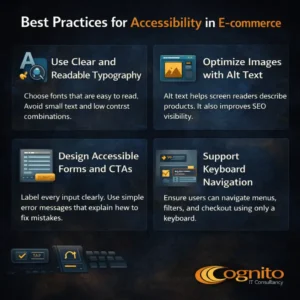
Use Clear and Readable Typography
Choose fonts that are easy to read. Avoid small text and low contrast combinations.
Optimize Images with Alt Text
Alt text helps screen readers describe products. It also improves SEO visibility.
Design Accessible Forms and CTAs
Label every input clearly. Use simple error messages that explain how to fix mistakes.
Support Keyboard Navigation
Ensure users can navigate menus, filters, and checkout using only a keyboard.
Accessibility in E-commerce Improves Mobile Experience
Mobile users benefit greatly from accessible design. Larger tap targets, readable text, and clear layouts reduce friction on small screens.
Since mobile traffic dominates e-commerce, accessibility directly impacts mobile conversions.
Accessibility and SEO: A Hidden Advantage
Search engines favor accessible websites. Clean structure, descriptive text, and proper labeling help crawlers understand content better.
As a result, accessibility in e-commerce supports:
- Better rankings
- Higher organic traffic
- Improved engagement metrics
SEO and accessibility work best together.
Legal and Ethical Considerations
Many regions require digital accessibility compliance. However, inclusive design should go beyond legal minimums.
Ethical brands design for everyone. Customers notice this commitment and reward it with loyalty.
How to Get Started with Accessibility in E-commerce
Start small and iterate:
- Audit your site for accessibility issues
- Fix high-impact pages first
- Test with real users
- Monitor performance changes
Accessibility improvements compound over time.
FAQs: Accessibility in E-commerce
What is accessibility in e-commerce?
It is the practice of designing online stores that everyone can use, including people with disabilities.
Does accessibility really increase sales?
Yes. Accessible stores reduce friction and improve conversion rates.
Is accessibility expensive to implement?
No. Many fixes are low-cost and high-impact.
Does accessibility help mobile users?
Absolutely. Accessible design improves mobile usability significantly.
Is accessibility required by law?
In many regions, yes. Compliance varies by location.
How does accessibility affect SEO?
It improves structure, usability, and engagement, which support SEO.
Conclusion
Accessibility in e-commerce is one of the most overlooked growth opportunities. Inclusive design improves usability, builds trust, and increases conversions without increasing acquisition costs.
When you design for everyone, you sell to a broader audience. And when shopping feels effortless, sales follow naturally.
→ Get a Personalized Recommendation from Cognito.
📩 Get your free audit here: https://cognitoitconsultancy.com/
📧 Book a Strategy Call: sandy@cognitoitconsultancy.com
👉 Meet Now: https://cal.com/cognitoitconsultancy/30min
🔗 Shopify Experts: Click Here
Follow Us for More Insights on D2C and Digital Transformation
Stay ahead of the curve in e-commerce, digital strategy, and IT consulting by connecting with us on our social platforms: