
Shopify Automation Risks | Avoid Costly E-Commerce Mistakes
Shopify Automation Risks – Shopify automation promises growth, speed, and consistency. But if used carelessly, it can cause the exact opposite — lost revenue, frustrated customers, and reduced brand trust.
At Cognito IT Consultancy, we’ve seen firsthand how businesses push Shopify Flow too far. In their quest for “hands-free” success, they often trade empathy and insight for rigid logic. The result? Workflows that automate mistakes faster than humans can spot them.
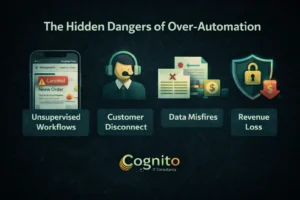
The Hidden Dangers of Over-Automation
Automation should make your life easier. Yet, when every process runs automatically, oversights turn into system-wide issues.
Here’s why Shopify automation risks can quietly damage your business:
- Unsupervised Workflows – Rules execute 24/7, even when conditions change.
- Customer Disconnect – Automated messages feel robotic and impersonal.
- Data Misfires – Overlapping triggers create inaccurate reports.
- Revenue Loss – Auto-cancellations and fraud filters block real buyers.
Each problem starts small. But when combined, they create a silent storm of inefficiency and lost opportunity.
When “Smart” Automation Turns Dumb
Shopify Flow is powerful, but without proper governance, it can quickly backfire.
Imagine this scenario:
Your fraud detection flow flags high-value international orders. The system cancels them instantly — no questions asked. You just lost a legitimate VIP customer.
That’s not efficiency; that’s automation gone rogue.
At Cognito, we call this the “robotic overreach” problem — when bots make judgment calls that humans should.
The Psychology Behind Over-Automating
Automation feels like control. But in reality, it can make teams less alert and more reactive.
Over time, your staff may stop checking what automations are doing. They assume everything works — until something breaks.
This complacency is one of the biggest Shopify automation risks.
The best automation strategy keeps humans in the loop, not out of it.
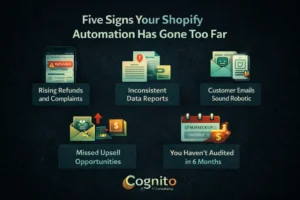
Five Signs Your Shopify Automation Has Gone Too Far
- Rising Refunds and Complaints
Automation ignores nuance — like delayed shipments or complex returns. - Inconsistent Data Reports
When multiple flows overlap, your metrics stop making sense. - Customer Emails Sound Robotic
Over-templated communication kills authenticity. - Missed Upsell Opportunities
Humans see sales openings that bots can’t predict. - You Haven’t Audited in 6 Months
Automation needs maintenance, just like software.
If these sound familiar, it’s time for a Shopify Flow health check.
Why Balance Beats Blind Efficiency
Shopify automation isn’t the enemy — blind automation is.
A strong system strikes balance:
- Let machines handle repetition.
- Let humans handle relationships.
At Cognito IT Consultancy, we help e-commerce brands design automation that thinks like a person, not a robot.
That means flows with flexible triggers, smarter conditions, and human fail-safes that prevent costly errors.
The Business Impact of Ignoring Shopify Automation Risks
| Problem | Impact | Solution |
|---|---|---|
| Auto-cancelled orders | Lost sales | Add manual review checkpoints |
| Overlapping triggers | Duplicate data | Simplify workflows |
| Robotic communication | Lost loyalty | Personalize automated emails |
| Missed cross-sales | Lower revenue | Blend automation with AI insights |
In short, when automation outpaces awareness, the business bleeds quietly.
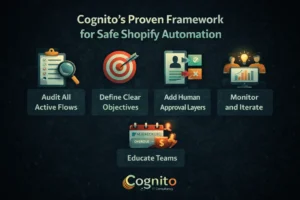
Cognito’s Proven Framework for Safe Shopify Automation
Our automation experts use a structured five-step approach:
- Audit All Active Flows
Identify outdated, conflicting, or unnecessary rules. - Define Clear Objectives
Tie every automation to a measurable outcome — sales, CX, or efficiency. - Add Human Approval Layers
For sensitive actions like refunds or cancellations. - Monitor and Iterate
Review performance monthly; tweak logic quarterly. - Educate Teams
Teach staff how automation works, not just how to use it.
This approach ensures Shopify automation stays smart, safe, and profitable.
Case Study: From Chaos to Clarity
A UK-based Shopify retailer came to Cognito after suffering sudden drops in conversion.
Their Shopify Flow setup auto-cancelled duplicate orders — including genuine repeat purchases. Once we optimized their automations and added a human approval rule, their sales recovered 15% in two weeks.
Efficiency isn’t about doing everything automatically — it’s about doing the right things intelligently.
The Future of E-Commerce Automation
Tomorrow’s e-commerce leaders won’t rely on full automation. They’ll use adaptive automation — systems that learn and collaborate with humans.
This balance of AI and empathy is what Cognito refers to as “responsible automation.” It’s the secret to sustainable growth in Shopify-based stores.
FAQs About Shopify Automation Risks
1️⃣ What are Shopify automation risks?
They’re the potential downsides of automating too many processes — from lost sales to poor customer experiences.
2️⃣ Can automation really hurt sales?
Yes. Over-aggressive rules can reject valid orders or frustrate loyal customers.
3️⃣ How often should I review my automations?
At least once every quarter. Shopify updates change how triggers behave.
4️⃣ How can Cognito IT Consultancy help?
We audit, redesign, and optimize your automations for safety and efficiency.
5️⃣ Is manual work still necessary?
Absolutely. Human review prevents small errors from becoming costly ones.
6️⃣ What’s the safest way to automate?
Start small, test continuously, and always leave room for human judgment.
Conclusion: Smarter, Not Harder Automation
The best automation doesn’t remove people — it empowers them.
At Cognito IT Consultancy, we believe automation should amplify your brand’s intelligence, not silence it. By addressing Shopify automation risks early, you protect both your profits and your reputation.
If your automations are running wild, it’s time to bring balance back.
📩 Get your free audit here: https://cognitoitconsultancy.com/
📧 Book a Strategy Call: info@cognitoitconsultancy.com
👉 Meet Now: https://cal.com/cognitoitconsultancy/30min
🔗 Shopify Experts: Click Here
Follow Us for More Insights on D2C and Digital Transformation
Stay ahead of the curve in e-commerce, digital strategy, and IT consulting by connecting with us on our social platforms:


