
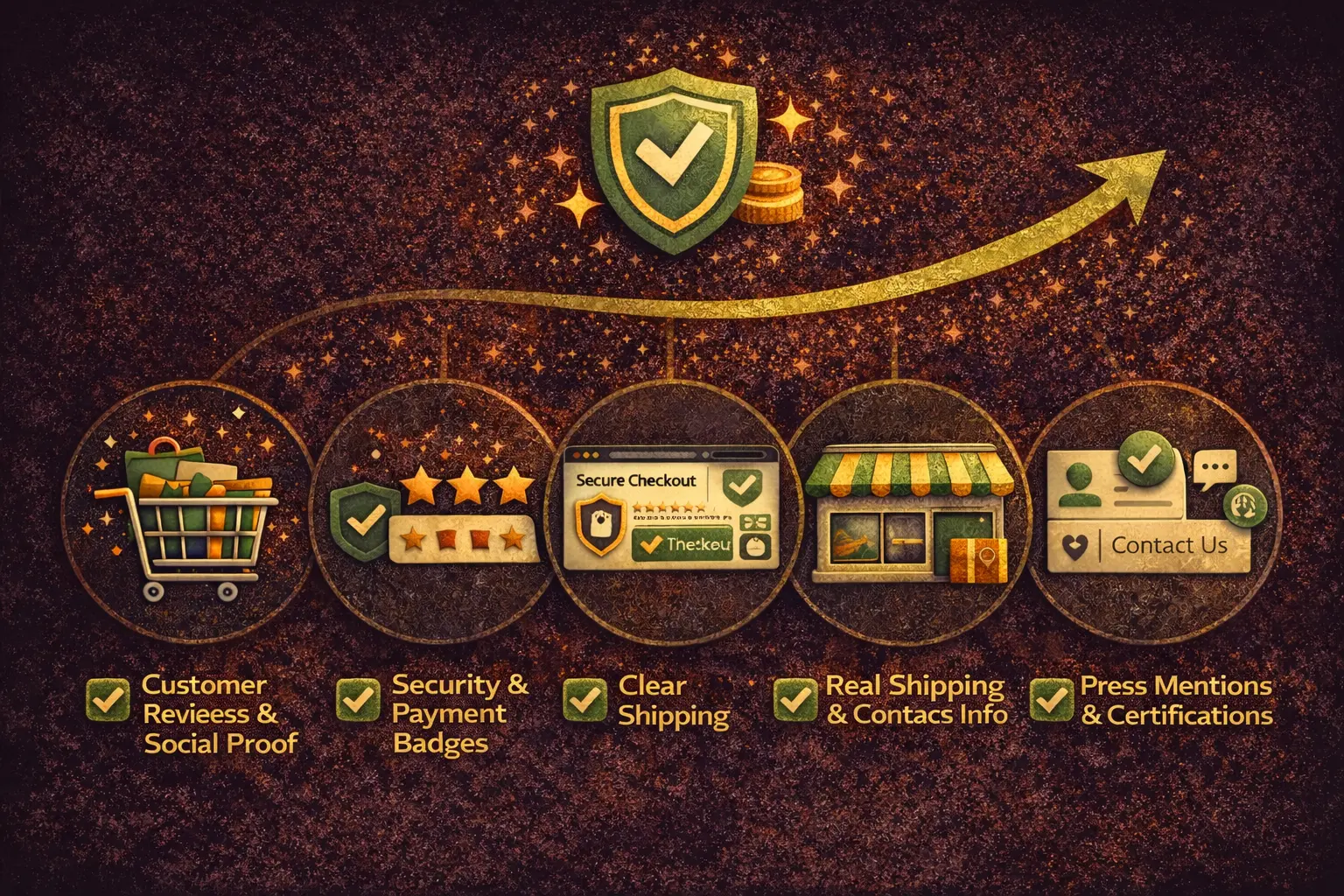
5 Shopify Trust Signals Every Shopify Homepage Needs
When visitors land on your Shopify store, they decide whether to trust you in seconds. Before they read product details or compare prices, they look for reassurance. This is where Shopify Trust Signals play a critical role.
Trust signals reduce uncertainty, increase confidence, and directly influence conversions. Without them, even great products struggle to sell. With them, hesitant visitors turn into confident buyers.
Introduction: Why Shopify Trust Signals Matter
Online shoppers are cautious by default. They worry about scams, poor quality, slow shipping, and difficult returns. Shopify Trust Signals address these concerns immediately by showing credibility, transparency, and reliability.
A homepage that communicates trust clearly keeps users engaged longer, lowers bounce rates, and improves conversion rates across the entire funnel.
What Are Shopify Trust Signals?
Understanding Trust in E-commerce
Trust signals are visual and textual cues that reassure visitors that your store is legitimate, secure, and customer-focused.
Why They Matter on the Homepage
The homepage sets the tone. If trust isn’t established there, most users never reach your product pages.
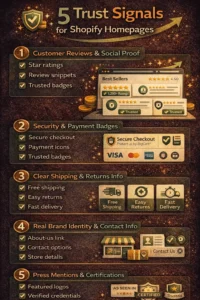
1. Customer Reviews & Social Proof
Why Reviews Build Instant Credibility
Reviews show that real people have bought—and liked—your products. They reduce perceived risk instantly.
How to Display Them Effectively
- Star ratings near the hero section
- Review snippets above the fold
- Verified buyer badges
2. Security & Payment Badges
Reducing Payment Anxiety
Security badges reassure users that their data is protected.
Best Placement for Maximum Impact
Place payment icons near CTAs, the header, or just below the hero section.
3. Clear Shipping & Returns Information
Transparency Builds Confidence
Hidden policies increase hesitation. Clear policies remove doubt.
What to Highlight on the Homepage
- Free shipping thresholds
- Easy returns messaging
- Delivery timelines
4. Real Brand Identity & Contact Information
Humanizing Your Store
People trust brands that feel real.
Elements That Increase Credibility
- About-us preview
- Contact details
- Business location or support hours
5. Press Mentions & Certifications
Borrowed Trust Works
Third-party validation boosts authority instantly.
How to Use It Without Clutter
- “As seen in” logos
- Industry certifications
- Partner badges
How Shopify Trust Signals Impact Conversions
Lower Bounce Rates
Users stay longer when they feel safe.
Higher Checkout Completion
Trust reduces last-minute hesitation.
Stronger Brand Loyalty
Trust leads to repeat purchases.
Common Trust Signal Mistakes to Avoid
Overcrowding the Homepage
Too many badges confuse users.
Fake or Outdated Proof
Nothing destroys trust faster than dishonesty.
Best Practices for Implementing Shopify Trust Signals
- Keep signals visible but clean
- Use real data and reviews
- Place trust cues near CTAs
- Update regularly
FAQs
1. Are trust signals really necessary for Shopify stores?
Yes. They directly impact conversions and buyer confidence.
2. How many trust signals should a homepage have?
Focus on 4–6 strong, relevant signals.
3. Do trust badges work?
Yes, especially when paired with clear messaging.
4. Where should reviews appear?
Above the fold or near primary CTAs.
5. Can trust signals replace discounts?
Often, yes—trust reduces the need for heavy incentives.
Conclusion
Trust is the foundation of e-commerce success. By implementing the right Shopify Trust Signals, you remove friction, reduce anxiety, and make it easier for customers to say yes. A trustworthy homepage doesn’t just look better—it converts better.
→ Get a Personalized Recommendation from Cognito.
📩 Get your free audit here: https://cognitoitconsultancy.com/
📧 Book a Strategy Call: sandy@cognitoitconsultancy.com
👉 Meet Now: https://cal.com/cognitoitconsultancy/30min
🔗 Shopify Experts: Click Here
Follow Us for More Insights on D2C and Digital Transformation
Stay ahead of the curve in e-commerce, digital strategy, and IT consulting by connecting with us on our social platforms:


