
Shopify Checkout Optimization: The Fastest Way to Reduce Cart Abandonment
If you’re running a Shopify store, improving sales doesn’t always require more traffic, more ads, or more discounts. Most brands lose revenue in a quiet place — the checkout flow. That’s why Shopify checkout optimization has become one of the highest-ROI growth levers for D2C brands in 2025.
According to Baymard Institute, 69.8% of online carts are abandoned, and 18% of shoppers leave because the checkout is too long or complicated.
The good news? Most of those losses are fixable with UX-driven checkout improvements — not new apps or redesigns.
✅ Why Checkout Flow Optimization Matters
Checkout is the last step before money is made. Every additional click, field, page, or surprise fee increases the chance of losing a ready-to-buy customer.
📉 Bad checkout = higher abandonment, lower revenue
📈 Optimized checkout = higher conversion rate, higher AOV, lower support tickets
A study by Bolt shows that brands saw a +35% lift in conversions after simplifying checkout to one page and enabling guest checkout.
🛑 The 4 Most Common Shopify Checkout Roadblocks
| Problem | Impact | Fix |
|---|---|---|
| Too many steps / pages | Decision fatigue | One-page checkout |
| Forced account creation | Friction + drop-off | Guest checkout |
| Hidden fees at final step | Emotional reversal | Up-front price display |
| Slow/loading checkout UI | Abandonment | Lean scripts, fewer fields |
🧠 Section 1: The Psychology Behind a Smooth Checkout
Shoppers are most motivated at the moment they click Add to Cart.
Every page, form field, or distraction after that moment works against momentum.
✅ Fewer clicks = higher completion
✅ Fewer form fields = higher trust
✅ Fewer surprises = higher satisfaction
That’s why the best-performing Shopify brands treat checkout like a friction-removal exercise, not a design exercise.
🧱 Section 2: Core Tactics for Shopify Checkout Optimization
🔹 1. Simplified One-Page Checkout
The fastest way to reduce friction is to remove steps entirely.
One-page checkout reduces cognitive load, makes the process feel “shorter,” and works better on mobile.
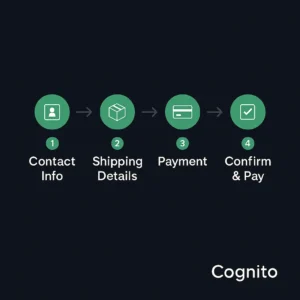
Example structure:
- Contact info
- Shipping info
- Payment
- Confirm & Pay
✅ Fewer clicks
✅ Less scrolling
✅ No multi-page load delay
🔹 2. Enable Guest Checkout (Never Force Account Creation)
Forcing users to create an account before purchasing is one of the highest abandonment triggers.
🚫 “Create account to continue” = instant exit
✅ “Buy without creating an account” = +26% conversion rate (Baymard)
Even better: Offer account creation after checkout, not before.
🔹 3. Display All Costs Upfront (No Surprise Fees)
Hidden fees are the #1 reason customers abandon checkout.
(48% of shoppers cite “unexpected shipping costs” as the reason they leave.)
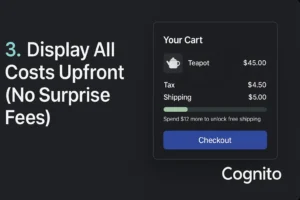
So instead of showing shipping fees at the last step, reveal them early — even inside the cart.
✅ Show tax + shipping preview before checkout
✅ Use a free-shipping progress bar (“Spend $12 more to unlock free shipping”)
✅ If using COD or duty fees, show notice before payment step
🔹 4. Auto-Fill, Auto-Detect and Speed UX Wins
Small UX enhancements = large revenue lift.
| Feature | Reason It Works |
|---|---|
| Auto-fill address + Google Places | Saves time on mobile |
| Auto-detect country from IP | Removes unnecessary dropdowns |
| Card number detection (Visa/Mastercard) | Builds trust cues |
| Address validation | Reduces failed orders |
Every second saved = higher completion rate.
🔹 5. Trust & Security Enhancers
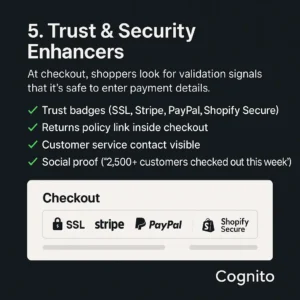
At checkout, shoppers look for validation signals that it’s safe to enter payment details.
✅ Trust badges (SSL, Stripe, PayPal, Shopify Secure)
✅ Returns policy link inside checkout
✅ Customer service contact visible
✅ Social proof (“2,500+ customers checked out this week”)
📈 Section 3: Real Data — Before & After Checkout Optimization
| Brand Type | Before | After Optimization |
|---|---|---|
| Beauty D2C | 1.87% CR | 2.91% CR (+55%) |
| Apparel Store | 49% abandon rate | 33% abandon rate |
| Nutrition Brand | +$6.80 AOV lift | +$11.30 AOV with upsell at checkout |
| Home Decor | 3-step checkout → 1-page | +23% checkout completions |
Source: Shopify+, Bolt, Baymard, Cognito client benchmarks (2024).
🧠 Section 4: Tools to Improve Shopify Checkout
| Tool / App | Purpose |
|---|---|
| Shopify Checkout Extensibility | Custom fields, blocks, reorder layout |
| Skipify | One-tap email-based checkout |
| Papertree / AfterSell | Post-purchase upsell |
| BeSure Checkout Rules | COD, country rules, fee logic |
| Rebuy / Slide Cart | Cart drawer upsells & progress bar |
🤝 Section 5: Want Us to Audit Your Checkout?
Most brands don’t need a redesign — they just need an optimized checkout flow.
We offer a free Shopify checkout audit that shows exactly where friction is happening and how much revenue is being lost because of it.
✅ Heatmap + session replay review
✅ Checkout field friction scoring
✅ Mobile UX stress test
✅ Revenue impact forecast report
📩 Get your free audit here: https://cognitoitconsultancy.com/
📧 Book a Strategy Call: sandy@cognitoitconsultancy.com
👉 Meet Now: https://cal.com/cognitoitconsultancy/30min
🔗 Shopify Experts: Click Here
Follow Us for More Insights on D2C and Digital Transformation
Stay ahead of the curve in e-commerce, digital strategy, and IT consulting by connecting with us on our social platforms:


❓ FAQ
Q1: What is Shopify checkout optimization?
It’s the process of improving the checkout experience to reduce abandonment, increase conversions, and speed up the path from cart to order.
Q2: Does one-page checkout always convert better?
In most split tests, yes — especially on mobile — but the final result depends on product type and shipping complexity.
Q3: Can Shopify checkout be customized without Shopify Plus?
Yes. With Checkout Extensibility, many custom blocks, validations, and UI edits are now possible on all plans.